






Floor replacement refreshes a space and fixes what sits underneath. Old materials are removed, subfloors are checked and corrected, and new flooring is installed with the right underlayment, transitions, and trim for a long, quiet life.
Overview
- Scope: demolition and haul‑away, moisture testing, subfloor repair and leveling, underlayments, and installation of hardwood, engineered, LVP/LVT, laminate, tile, and carpet tiles.
- Goals: flat substrate, solid attachment, quiet steps, clean transitions, and durable finishes.
- Spaces: living areas, kitchens, baths, entries, basements, stairs, and hallways.
What This Service Includes
- Removal & prep: pull existing flooring, scrape adhesives, address squeaks, fasten loose subfloor, and patch or plane high/low spots.
- Moisture & sound control: slab vapor testing, moisture barriers or retarders as required, acoustic underlayment in multi‑family or upper floors.
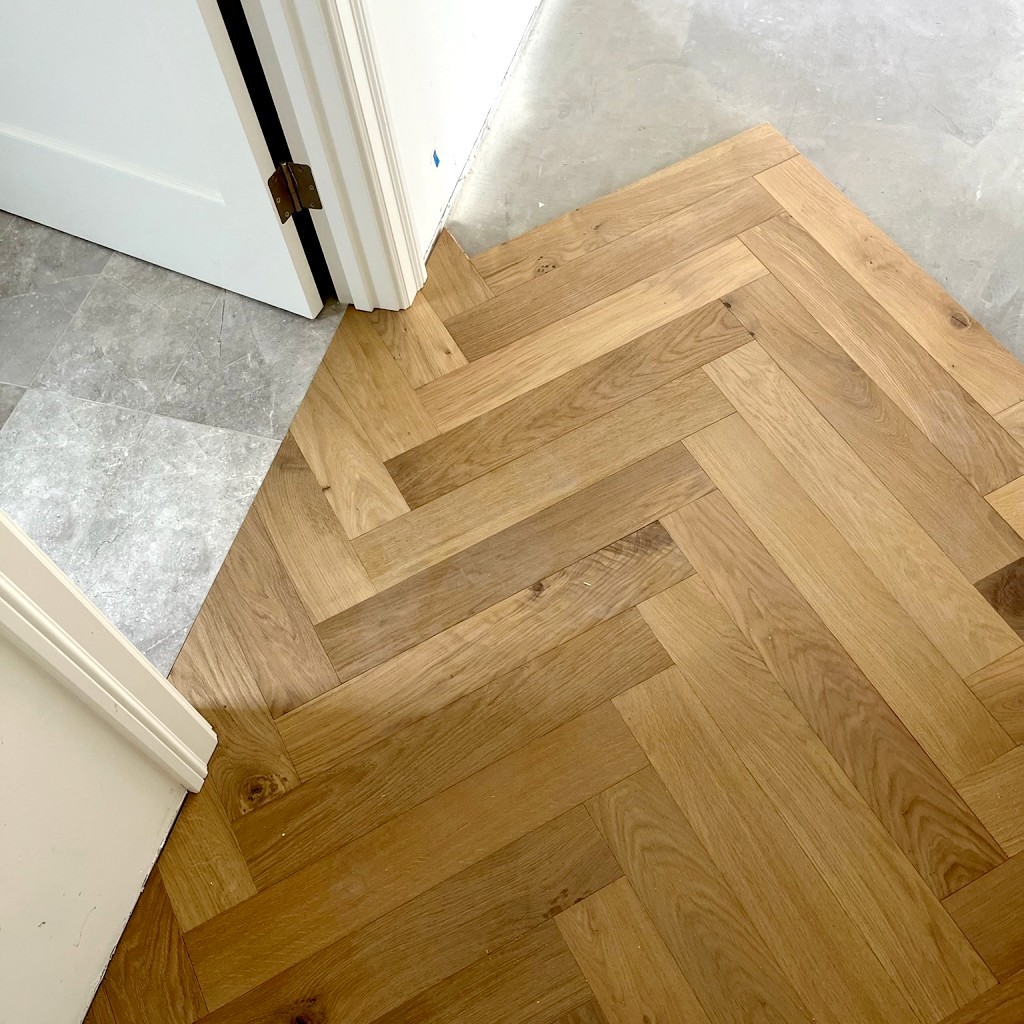
- Hardwood & engineered: acclimation, nail/staple or glue‑down or floating methods; expansion gaps; stair treads and nosings to match.
- LVP/LVT & laminate: flatness correction, click systems or glue‑down per spec; waterproof options for kitchens and basements.
- Tile: backer board or uncoupling membranes, movement joints, thinset selection, grout type (sanded/unsanded/epoxy), and careful layout at thresholds.
- Trim & transitions: new baseboards or shoe molding, reducers and T‑molds at doorways, flush or overlap stair nosings.
- Protection & cleanup: dust control, floor protection for adjacent areas, and thorough vacuuming before handoff.
Subfloor & Slab Standards
- Flatness tuned to product requirements (e.g., typical 1/8–3/16 in. over 10 ft, product‑dependent).
- Fasteners added where needed; squeaks addressed before finish flooring goes down.
- Self‑leveling compounds or feather‑finish patches used to correct dips and seams.
- Concrete checked for moisture; vapor mitigation applied when readings exceed manufacturer limits.
Sequencing & Conditions
- Occurs after drywall and most painting, before cabinets in some cases (tile) and after in others (floating floors)—sequenced by material and design.
- Interior conditioned to stable temperature/humidity; wood products acclimated per manufacturer guidance.
- Appliances and fixtures lifted and reset as needed; door clearances checked and planed if required.
Coordination With Other Trades
- Aligns with carpentry for baseboards and stair details; with tile setters for wet areas and transitions.
- Confirms elevations with cabinet, door, and appliance teams to maintain clearances and toe‑kick heights.
- Interfaces with electricians/plumbers when disconnects are required for appliance moves.
Quality Markers
- Flat, squeak‑free floor with tight seams and consistent reveals at walls and casings.
- Patterns and plank lengths balanced; tile lines straight and square; grout joints even and well packed.
- Transitions flush where planned and safe underfoot; trim caulked and painted/stained cleanly.
Care & Maintenance
- Follow cure times for adhesives, grouts, and finishes before heavy use.
- Use floor protectors under furniture; entry mats to control grit; manufacturer‑approved cleaners.
- Monitor humidity for wood floors; reseal stone and grout as recommended.